Nim
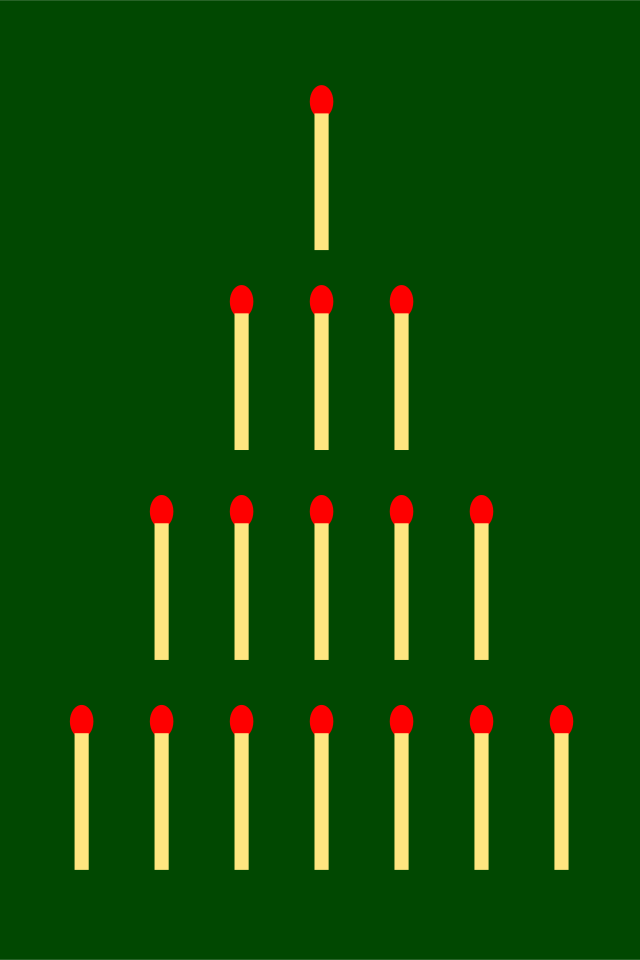
This is a classical 2 players game called Nim.
There are N rows with Ni sticks in each row.
By turns, each player takes as much sticks as they want from a single row.
The player that takes the last stick wins.
This is a 0 sum game with perfect information.
Goal
The goal of this game is to take the last stick.
Score
The player that takes the last stick: -
1The player that cannot take a stick: -
-1
Import
from IArena.games.Nim import NimPosition
from IArena.games.Nim import NimMovement
from IArena.games.Nim import NimRules
Movement
A movement is represented by 2 int representing the number of the row and the number of sticks:
line_index-int-0 <= line_index < N- Index of the line to remove sticksremove-int-0 < remove < Ni- Number of sticks to remove from the line (must be less than the number of sticks in the line)
movement = NimMovement(
  line_index=2,
  remove=1)
# Remove 1 stick from the 3rd line
Position
A position is represented by a list of int describing each row:
# position : NimPosition
len(position)      # Number of rows
position[0]        # Number of sticks in the first row

lines = position.get_lines()  # Get the list of int
len(lines)         # Number of rows
lines[0]           # Number of sticks in the first row
Note
This class has every other method from IPosition, for example next_player.
Rules
The NimRules inherits from IGameRules and implements the rules of the game.
Constructor
Can receive 1 argument:
original_lines-List[int]- The amount of sticks in the first position - Default:[1,3,5,7]
# Start default game [1,3,5,7]
rules = NimRules()

# Start game with 3 rows of 5 sticks
rules = NimRules(
  original_lines=[5,5,5])
Score
The score is calculated by the NimRules class.
The player that takes the last stick wins, so the score is 1 for the winner and -1 for the loser.